Can These Bones Live?
On Hilary Mantel, the art of bringing the dead to life, and learning to write from inside the moment

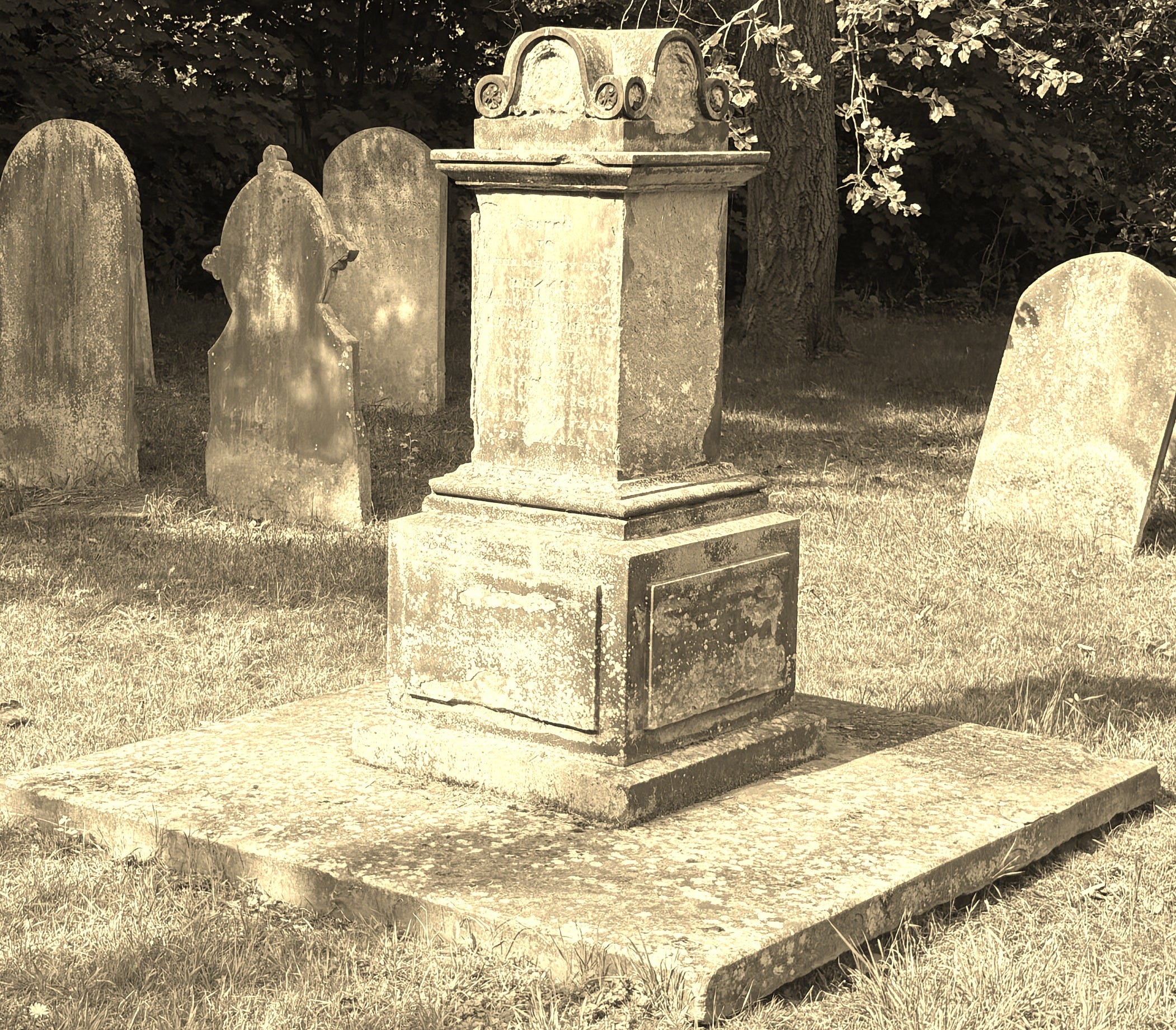
I pass her grave often.
The lettering softened by weather,parts missing will soon be unreadable.
A young woman who died far from home – in Russia.
Every time I see it, I wonder: can I bring her into a story?
And if I try, how can I possibly do that when I know almost nothing about the time she lived in?
It feels impossibly distant – another language, another world.
That’s why Hilary Mantel’s Reith Lecture Can These Bones Live? landed so deeply.
She begins with the question from Ezekiel: Can these bones live?
In the story, God asks the prophet to breathe life into the dead, to make the dry bones rise.
Mantel turns the question toward writers – but I found myself turning it back toward my own gravestone–ghost of a woman.
Not just can she live?
But how?
And what kind of life am I allowed to imagine for her?
Because the truth is, I don’t want to reconstruct her.
I want to feel her world – its cold, its faith, its constraints – and to find a pulse there, however faint.
As I work on Kezzia – a dual-timeline novel about a Victorian woman who travels to Russia and a modern teenager who begins to uncover her story – Mantel’s questions feel like they belong to me, too.
Sometimes, as she says, life from the inside feels like defeat.
Kezzia, Mary, and Kez all live through moments without seeing the bigger picture.
They don’t realise they’re on a journey or that they’ll overcome things.
They’re simply in the moment, responding to life as it unfolds.
That’s something I keep forgetting when I write.
Because I know how the story ends, my characters sometimes carry that knowledge too – and that makes the scenes too smooth, too knowing.
When I remind myself that they don’t see the bigger picture, that they’re walking blind into their own story, something loosens.
They come alive again.
Mantel also said that characters can ask awkward questions – the very ones readers might be asking.
That was a revelation.
In the modern storyline of Kezzia, I’ve started to let my characters do exactly that.
Mary can wonder aloud why Winslow would risk his job for Kez.
Eddie can say what the reader’s thinking: what’s the point of all this?
Those questions give the story breath.
They make the bones shift and rustle.
Listening to Mantel has changed the way I see Eddie, too.
I used to treat him as if he’d always known Kez would go to university – as though he was gently steering him there.
But that was my twenty-first-century lens speaking.
Of course Eddie wanted him for the apprenticeship.
Of course he hoped the business would grow enough to take him on.
He’s going to be disappointed when that falls through – and that’s what gives him depth.
It’s those disappointments, those blind spots, that make characters feel real.
So when I ask, can these bones live? I’m not asking whether I can resurrect a lost woman from 1850s Suffolk.
I’m asking whether I can write her, and everyone who follows her, from the inside – without hindsight, without control, without tidying their lives for them.
To write them in the thick of it, when life feels like defeat.
To let them be messy, mistaken, still in motion.
That’s where the life is.
And maybe that’s what Mantel meant – that the dead aren’t gone, their imprint asks us to remember that, of course, they didn’t know the end of the story as they were living it. If we want to write historical characters, we need to write what it is to be alive inside uncertainty.
Further listening
Hilary Mantel’s Reith Lecture Can These Bones Live? (BBC Radio 4) — transcript and audio available here.
My Novel Year
I’m a novelist and somatic life coach, working with writers, creatives, and anyone wanting to bring more creativity into their lives.
If you’d like to follow my progress through My Novel Year – as I work on Kezzia, my dual-timeline novel set between Victorian Britain and present-day Suffolk – please subscribe.