Finding the first sentence
On a month to myself, writing in Ashburton

I’ve had an idea for a story for over twenty-five years (see The Story That Won't Let Me go)
This is what happened when the ghost in the story started making herself known again late last year.
I began with her. All I knew was that she died at the age of twenty-two in the interior of Russia — the largest country in the world, spanning two continents across two land masses. A vast open space in which she and her story had seemingly been lost. What could I find out?
The ancestry websites at the local library turned up a few facts: she’d been born Kezzia Rowe and lived in London. There she met and, at seventeen (described on her marriage certificate as a minor), married a Suffolk man — Alfred, an engineer — and they had a child, Alma. I traced both sets of parents and found that they changed jobs regularly, in trades that no longer exist today: millwright, cooper, ostler. By the age of twenty-two, Kezzia was gone. Alfred married again, and they had a child, Elizabeth, named after his mother. That’s where the trail went cold. Like so many ordinary Victorian lives, their details disappeared in lost documents and misspelt names.
It wasn’t much of a story. I wanted to know more. But as a writer, I knew I could honour her by creating one. From my archive research I realised that to make it believable, I had to connect her to the aristocracy, whose lives were recorded. Yet a life of privilege didn’t seem right — so I chose to make her a rector’s daughter, a kind of poor relation of a lord of the manor.
And then I found myself in Ashburton, a stannary town on the edge of Dartmoor, house-sitting for my sister for a whole month. It was a gift from the universe — I could be close to my daughter and her two-week-old baby, and in between have all the peace and quiet I needed to write.
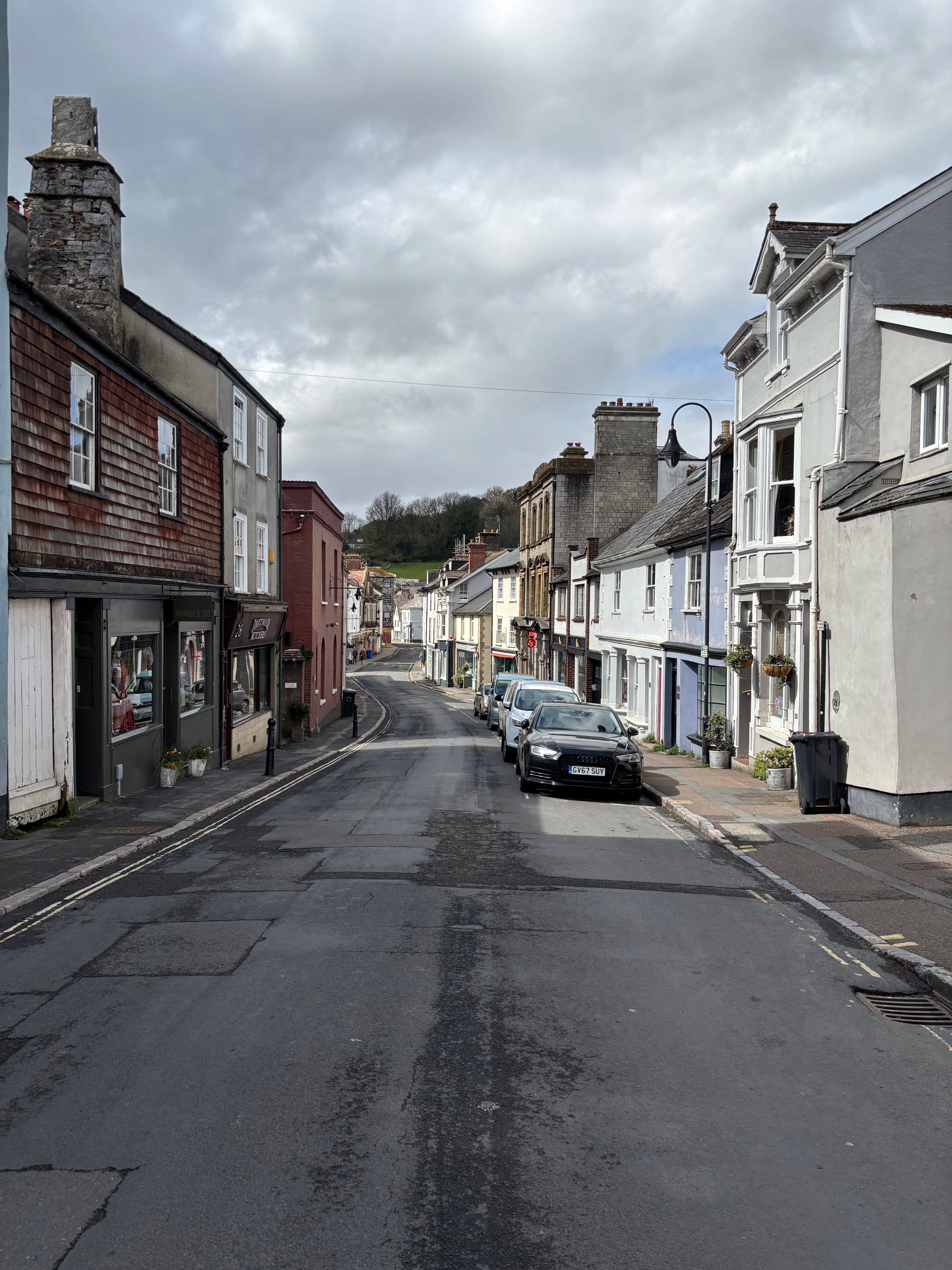
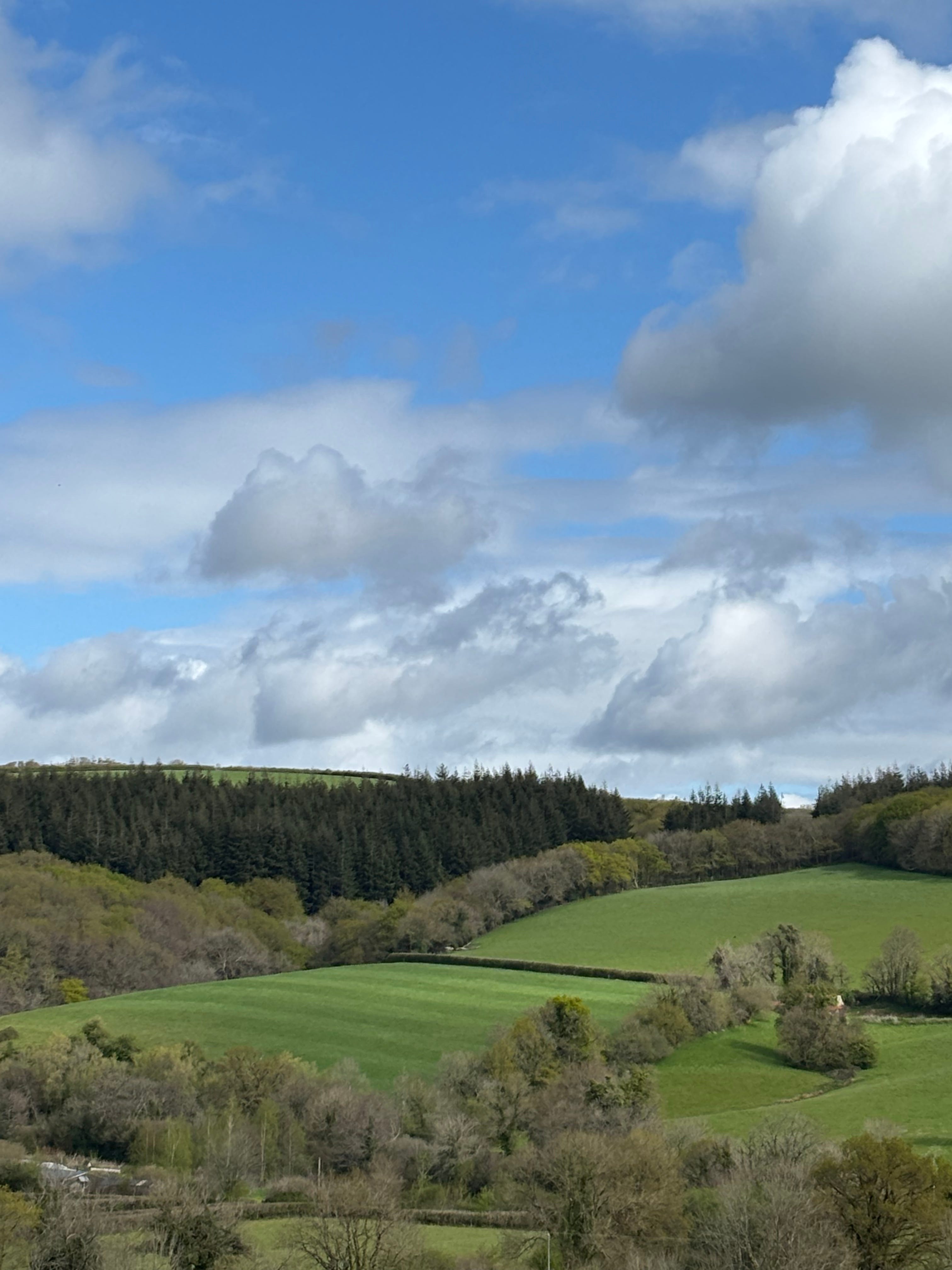
Ashburton is one of those small towns that feels self-contained and timeless. I’d walk past the butchers (I’m vegetarian, but they sold the best veggie pasties anywhere — though once I had to steady myself as the butcher was carving up a whole pig in front of me), and the dear little bakery with its sourdough and hot cross buns, into the new health food shop filled with local produce and every kind of treat I could dream of. Everyone seemed to know each other. There was a sense of being on the edge of something — the bleak sweep of Dartmoor with Hay Tor looming in the distance on one side, and rolling green hills and budding woodland on the other. The River Ashburn slid beneath ancient houses, carrying time with it, as if centuries hadn’t really passed.
You could say a new life in my arms each morning; new life on the page each evening. I’d drive back to my borrowed home and fill the woodburner with logs, light a candle, and sit beside the flickering flames with my notebook.
Beth Kempton ‘s Ink and Flame course gave me chances to explore different kinds of writing and editing, and it was staying away from writing the first sentence that helped me build up the pressure I needed to take that step.
Then I sketched out a three-act structure — a beginning, a middle, and an end. I wanted a teenage male protagonist and decided to set the story across two time zones. I wrote a few character bios and story arcs. I read everything I could find about the Crimean War. I found old notebooks I had started twenty years ago, filled with research and ideas — lying in wait for me to bring them to life.
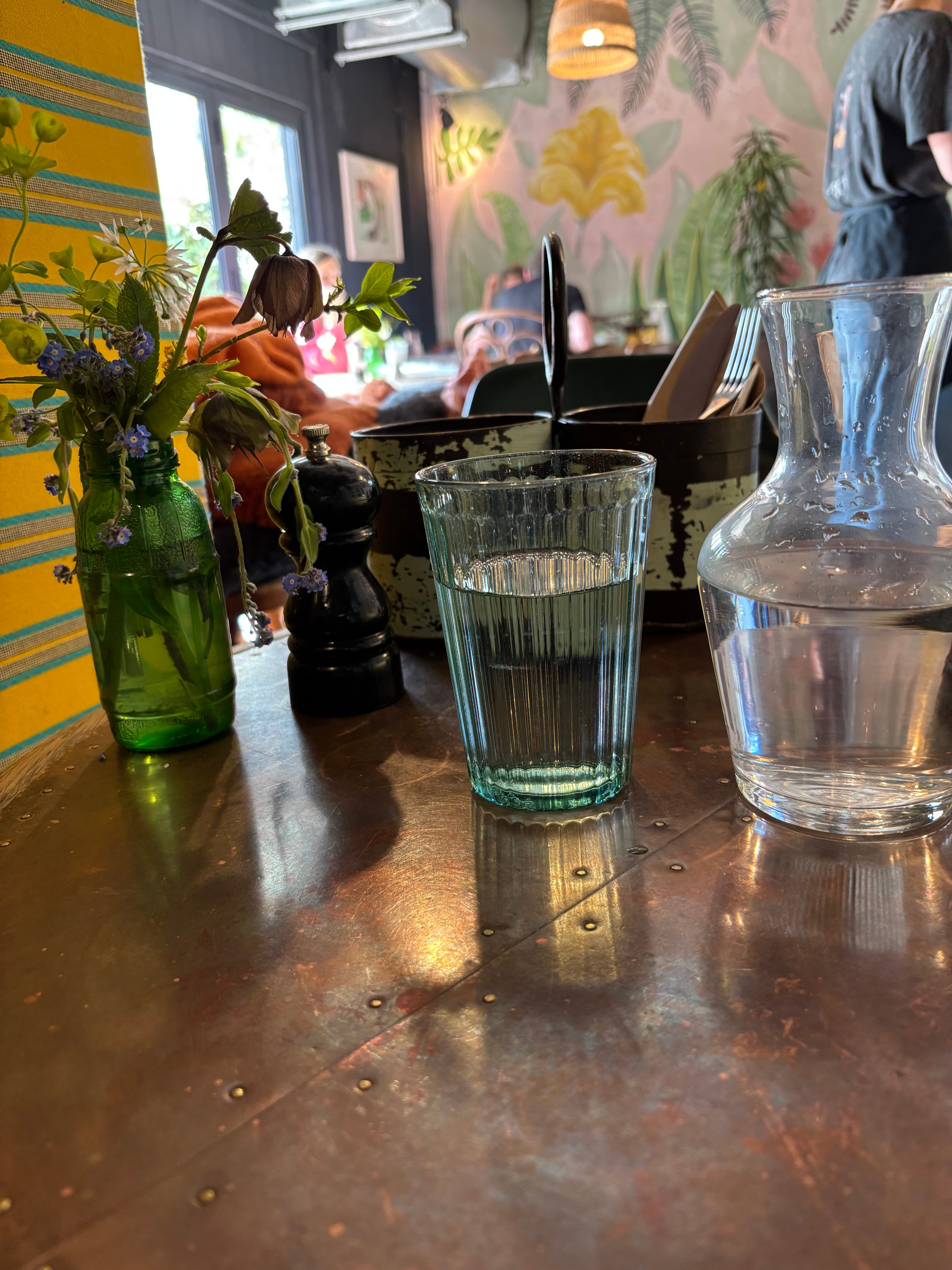
Over that month I walked the woods. I wandered the narrow streets. I listened in cafés to the rhythms of strangers’ conversations. I scribbled in my notebook. Once in a café, fascinated by the eight sets of shoes belonging to people at the next table, I wrote about them — trainers, scuffed sneakers, polished brogues.
Other times, I wrote a scrap of dialogue that made me smile: like when I went into the Co-op to buy paracetamol. The cashier rang it up, I tapped my card, and as I picked up the box of tablets he said, “Enjoy!”
And the more I wrote, the more I felt her presence — not haunting, but urging. Like a friend saying, Come on, keep going.
But you don’t need to be locked away in an ivory tower to write. You just need to feel the urge.
Life wasn’t all writerly and peaceful — I was as much coping with toddler tantrums and bedtimes and soothing a crying newborn as I was sitting by the fire writing. Because you need to live. To walk through sloping Devon fields, to sit amidst the clink of coffee cups and the rise and fall of voices.
To notice the everyday and let it filter through you until it becomes something else on the page.
I was back on the beach at Lowestoft when I finally wrote the first page. Sitting amongst the sand dunes, a fresh sea breeze tugging at my scarf, I opened my notebook. The ghost had whispered long enough; it was time to begin. And the words that came were these:
“It’s the kind of early September day that makes you believe summer will go on forever.”
It was just a beginning. But beginnings are everything.
Anne Lamott encourages us to let our characters be themselves, in some new age, bathroom mirror style pos-it meme. She's right though: once created, we must let them go. I liked the way you described your process, Carole. Some days it feels as if we are surrounded by crowds of stories.
Beautifully inspiring, Carole 💕 I have scribbled down some ideas for a novel myself, inspired by your posts 💖💗🥰💞